Mend the sash windows first
A rattling box sash may need repair rather than replacement. When to mend, when to upgrade, how to compare the quotes and what the rules say if you replace.

A timber box sash is a simple machine. Two sashes, four cords, four weights hidden in the box, a couple of pulleys and some beads holding the lot in place. Much of what goes wrong with one can be fixed by a joiner with a van, and surviving original windows may already have served the house for more than a century.
That is the case for mending. It is often the cheaper case too, though only a priced comparison will tell you.
What actually goes wrong
The cords snap. The sashes are painted shut. The bottom rail and the sill rot where water sits on them. Putty cracks and falls out, and the whole thing rattles in a south-westerly because the beads have been knocked about and nothing fits snugly any more.
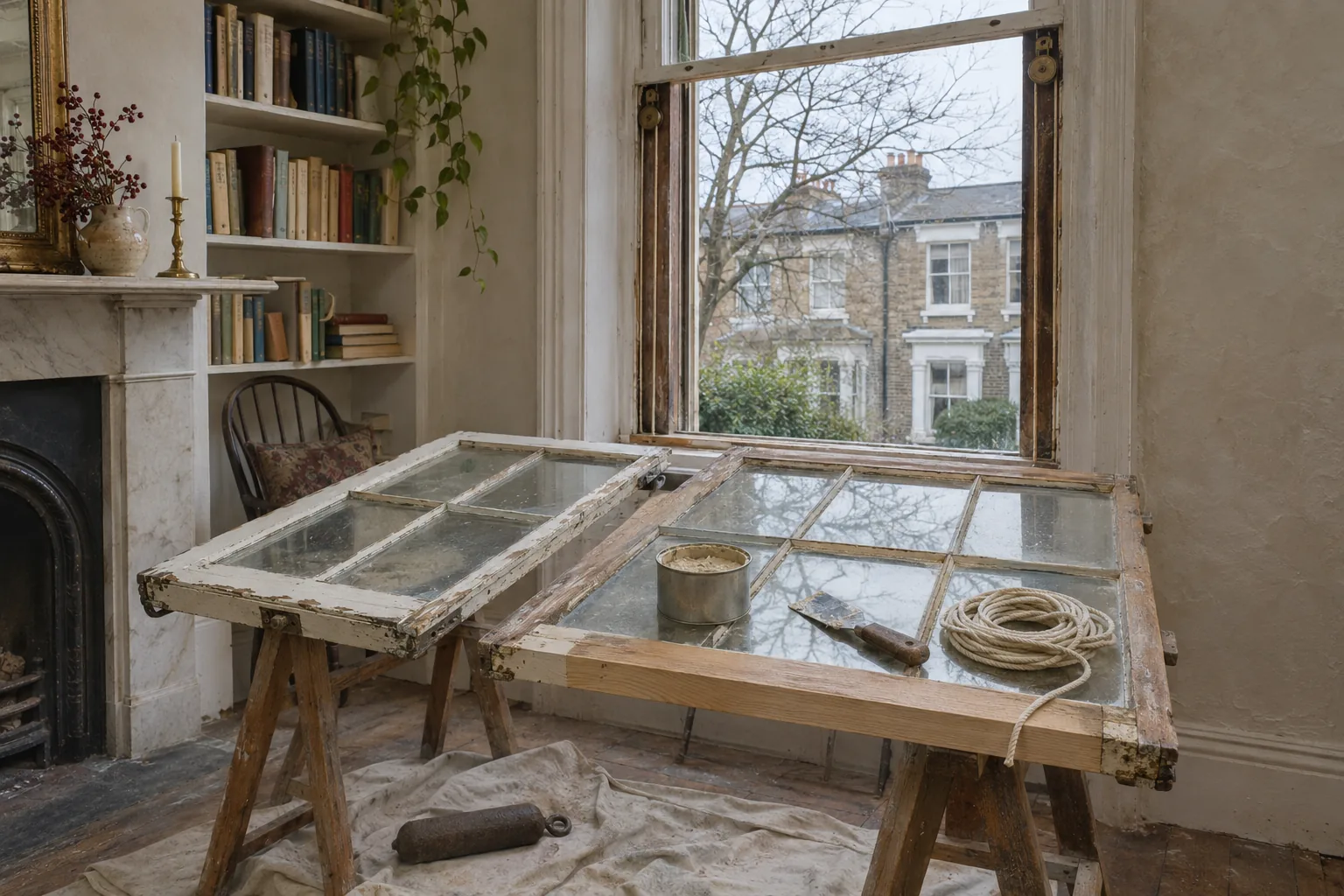
These faults often allow local repair, though a joiner should check the frame and the sash joints before estimating the work. A rotten sill or bottom rail can be cut back and a new piece of timber spliced in, glued and pinned, then painted so you would struggle to find the join. Checkatrade’s figures, updated in July 2026, put a sill splice at about £180 on average and a full refurbishment at £620 to £920 a window, around £770 typically. A new timber sash window starts from about £1,450 installed on the same page. London prices tend to sit at the top of those ranges. Ask for a specified repair and draught-proofing quote, price secondary glazing separately, and compare the total with replacement.
Keep the old glass if you can. Original crown or cylinder glass, with its faint ripple and the odd bubble, carries evidence of the window’s age. New mouth-blown restoration glass is available, but it does not replace that history, and a careful joiner will take them out whole, clean the rebates and bed them back in linseed oil putty. After that the best protection is boring: a coat of paint every five to ten years, as Checkatrade also advises, and a look at the sills each autumn. A lot of rot in old sashes starts as a failed bit of putty that nobody noticed.
Upgrading without replacing
Draught-proofing does more than most people expect. A specialist routs a slot into the staff and parting beads and the meeting rails and fits brush or rubber seals, so the sashes still slide but the gaps close. Checkatrade gives an average of about £318 a window.
Then secondary glazing: a slim, separate inner window fitted inside the reveal, ideally with low-emissivity glass. It leaves the original sashes untouched, it can be taken away again, and the air gap helps with traffic noise as well as heat. Done well, with frames painted to match and the meeting rail lined up, it disappears in a way the brochures rarely show. On a listed building, ask the conservation officer before ordering; whether it needs consent depends on how it is fixed and what it covers.
Shutters are the oldest upgrade and the most overlooked. If your house has shutter boxes, open them. Many have been painted shut since the 1950s. Freed, eased and closed at dusk, they cut draughts and look exactly right, because they are.
Repair the timber before deciding that the whole window has failed.
Slim double-glazed units fitted into existing or new sashes are the other route. They are thin, often around 12mm overall, but still thicker and heavier than a single pane, so rebates may need deepening and the weights changing. On a listed building, assume this needs a conversation with the conservation officer first: changing the glazing, rebates and weights can affect historic character and require consent. Later replacement sashes may offer more scope for upgrading than sashes that still hold old crown or cylinder glass, depending on their significance and the details proposed.
If you do replace
Sometimes a window really is finished, or a 1970s replacement needs undoing. Replacing a whole window brings in the Building Regulations. In England an external window is a “controlled fitting”, and since April 2002 replacement glazing has been covered.
The current standard is in Approved Document L, Volume 1 (the 2021 edition incorporating 2023 amendments). A new or replacement window in an existing house should reach a U-value of 1.4 W/m²K or a Window Energy Rating of Band B. Where that cannot be met because the character of the building has to be kept, paragraph 4.10 allows either a centre-pane U-value of 1.2 or single glazing with low-emissivity secondary glazing. Listed buildings and those in conservation areas need not comply fully where it would unacceptably alter their character or appearance (paragraph 0.8), and the building control body should listen to the conservation officer. A 2026 edition of the document takes effect on 24 March 2027 and keeps the 1.4 figure for replacement windows; check which edition applies when your work starts.
Thermal performance is only part of the specification: ventilation, safety glazing and any escape function also need checking. Agree at the start how compliance will be certified. There are two routes. Use an installer registered with a competent person scheme (FENSA, CERTASS, Certsure, NAPIT, Blue Flame Certification and ASSURE are the schemes the government lists for windows), who will give you a certificate. Or apply to building control and have the work inspected. Keep the certificate. Your buyer’s solicitor will ask for it.
Planning, conservation areas and listing
For a house in England, new windows of similar appearance to the originals are generally permitted development. Two exceptions matter here. In a conservation area the council may have made an Article 4 direction that removes that right for particular elevations, often the front. And flats and maisonettes have no householder permitted development rights at all, so a change in appearance needs planning permission, quite apart from what your lease says.
In a listed building, at any grade, replacing windows will usually need listed building consent where it affects the building’s special architectural or historic character, so confirm the proposed work with the council. Doing it without consent is a criminal offence. Like-for-like repair of the kind described above is a different matter, but ask the conservation officer before the joiner arrives, not after. Our piece on owning a listed building covers the process.
Our view
Mend first. Draught-proof second. Add secondary glazing or open the shutters third. Replace only what is beyond repair, and when you do, have a joiner copy the old window down to the horns and the glazing bars. Uniform 1990s double-glazed sashes with stuck-on bars are the quickest way we know to make a good street look tired.
Rules described here apply to England unless stated; check with your local council before you build. Figures and guidance correct as of 18 November 2026. This article is general guidance, not professional advice for your property.
Sources
- Checkatrade: Sash window restoration costs (updated July 2026)
- GOV.UK: Approved Document L, conservation of fuel and power
- Planning Portal: Doors and windows, Building Regulations
- Planning Portal: Doors and windows, planning permission
- GOV.UK: Competent person schemes, current schemes
- Historic England: Traditional windows, their care, repair and upgrading
- Historic England: What are listed buildings?