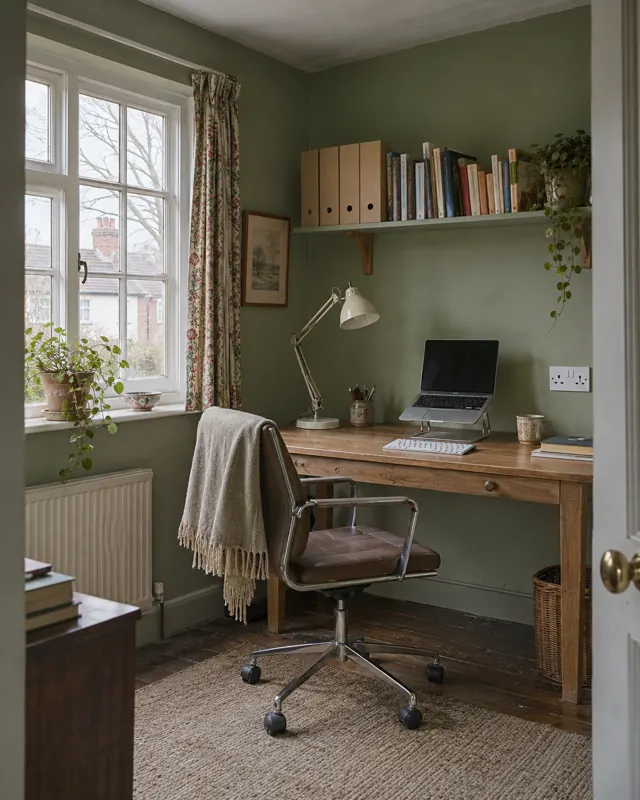
A small flat, made to feel bigger and warmer
A small flat needs clear routes, useful storage and furniture that earns its space. Changes for owners and renters, from rearranging what you have to commissioning fitted cupboards.
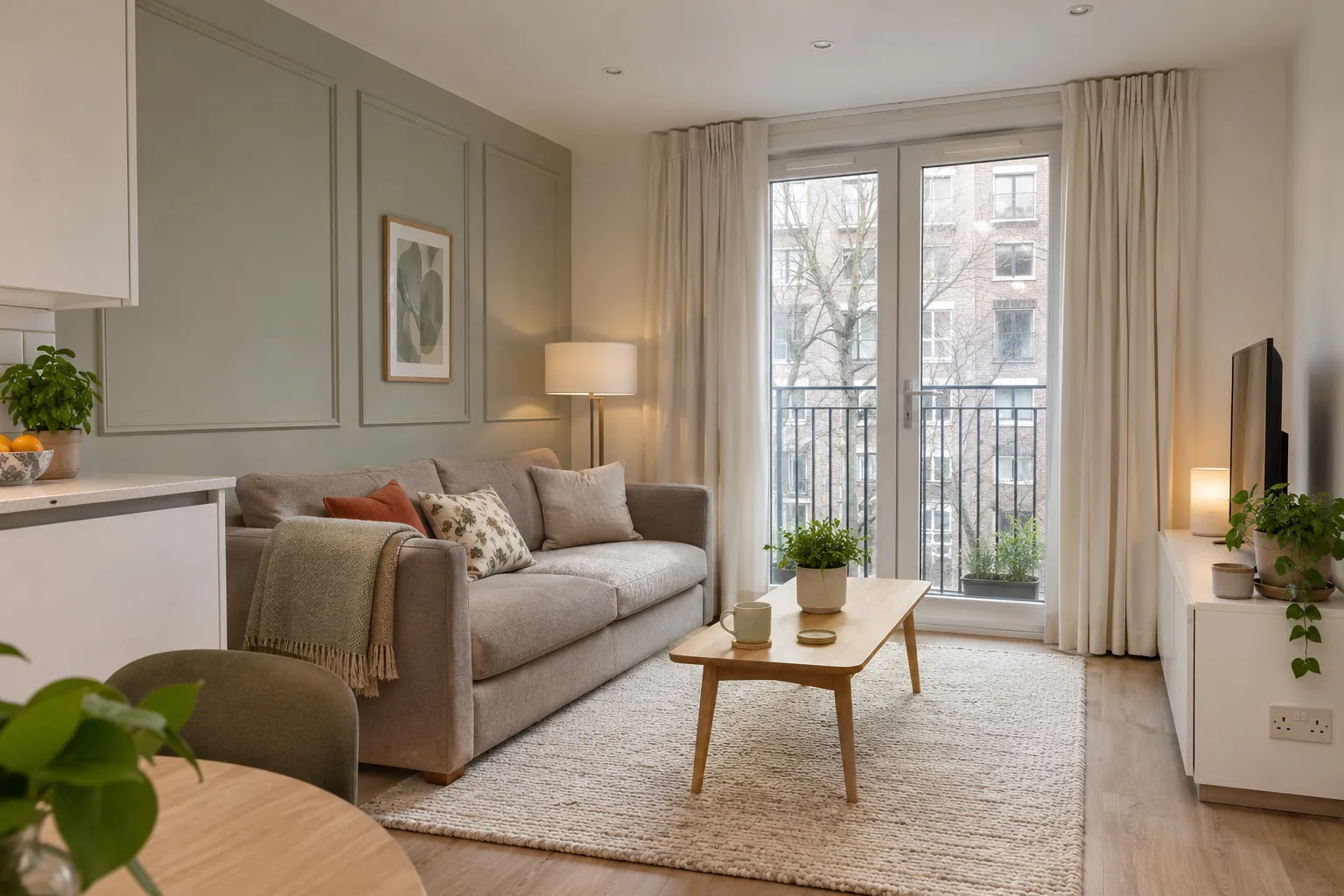
In a small open-plan flat, the same room may have to take cooking, supper, work and the washing rack. Start with those jobs before choosing another piece of furniture.
Small and plain are two separate problems. A small room needs planning; a plain one needs things added that have a bit of age, texture and shadow. You can fix both without moving a wall.
Layout first
In a small open-plan living-kitchen, decide where you sit, where you eat and where you walk, and keep the walking route clear: about 900mm wide, from the front door to the balcony or main window. Then put the largest piece, usually the sofa, against the longest unbroken wall, or float it with its back to the kitchen to make a quiet edge to the sitting area.
Fewer, larger pieces look calmer than many small ones. Compare actual dimensions with the number of seats you need. One sofa and a good chair may leave more usable floor than a two-seater, two tub chairs and a pouffe; equally, a compact two-seater may be exactly right. Choose furniture on legs where you can, so the floor runs underneath and the room reads larger.
A rug helps to say “this is the sitting room” in a space that is also the kitchen and hall. Make it large enough for the front legs of the sofa and chair to stand on it. Our piece on arranging a living room has the measurements.
Furniture that does two jobs
The best multi-use pieces are ordinary furniture used well, not clever gadgets.
- An extending table: seats two every day and six on Sundays.
- An upholstered footstool with a tray on top: coffee table, extra seat and toy box.
- A nest of tables, which tidies away into the footprint of one.
- A drop-leaf or gateleg table against the wall, if you rarely eat with more than two.
- A good sofa bed for a one-bedroom flat with occasional guests. Test the mattress in the shop, lying down, for longer than feels polite.
Mirrors, done well
A large mirror reflects light and doubles the view, but placement matters. Put it on a wall at right angles to the window, or opposite it if what it reflects is worth seeing. A mirror that reflects the kitchen extractor or the boiler cupboard doubles those too. One big mirror, in a timber or metal frame, looks better than a cluster of small ones. A tall mirror leaning against the wall may still need wall restraints, so follow its maker’s instructions; if you cannot make the fixings, choose a smaller mirror designed to stand safely without them.
Curtains hung high and wide
Raising a curtain pole can change the proportions of a room, but price longer curtains before you move it, and renters should agree new fixings first. Poles and blinds are often fitted just above the window frame. Move it up to 100 to 150mm below the ceiling, and extend it 200 to 300mm beyond the frame on each side, so the curtains stack against the wall rather than over the glass. Use curtains that reach the floor, in a lined linen or cotton. The window looks taller and wider, you lose none of the daylight, and the room gets the soft vertical folds that plain new walls lack.
Colour strategy
Brilliant white makes small rooms with modest daylight look grey, not bigger. A warmer white or a soft colour usually looks cleaner. We would test, on A4 card in your own light:
- Little Greene Slaked Lime (105), a soft warm white, around £60 for 2.5 litres at John Lewis in November 2026.
- Farrow & Ball Setting Plaster No. 231, a dusty plaster pink, which is kinder to skin and to brick views than it sounds.
- Dulux Pebble Shore, a sandy mid neutral, £25 for 2.5 litres at Wickes in November 2026, for a hall or bedroom.
- Lick Green 07, a muted mid green, for panelling or the lower part of a wall.
Paint the woodwork the same colour as the walls, or a shade darker, rather than in white gloss. Fewer contrasting lines make a small room feel less chopped up. Remember that screens and online swatches lie, and sample before you buy.
Storage, built to the ceiling
Small flats run out of storage before they run out of floor. Build up: a run of cupboards to the ceiling along one wall looks like part of the architecture, while a wardrobe that stops 400mm short looks like furniture you have to dust on top of. Paint the doors the wall colour and the cupboards almost vanish. Under the bed, use drawers or a bed with a lifting base. In the hall, a shallow cupboard 300mm deep takes shoes and coats.
Adding character to a plain new-build
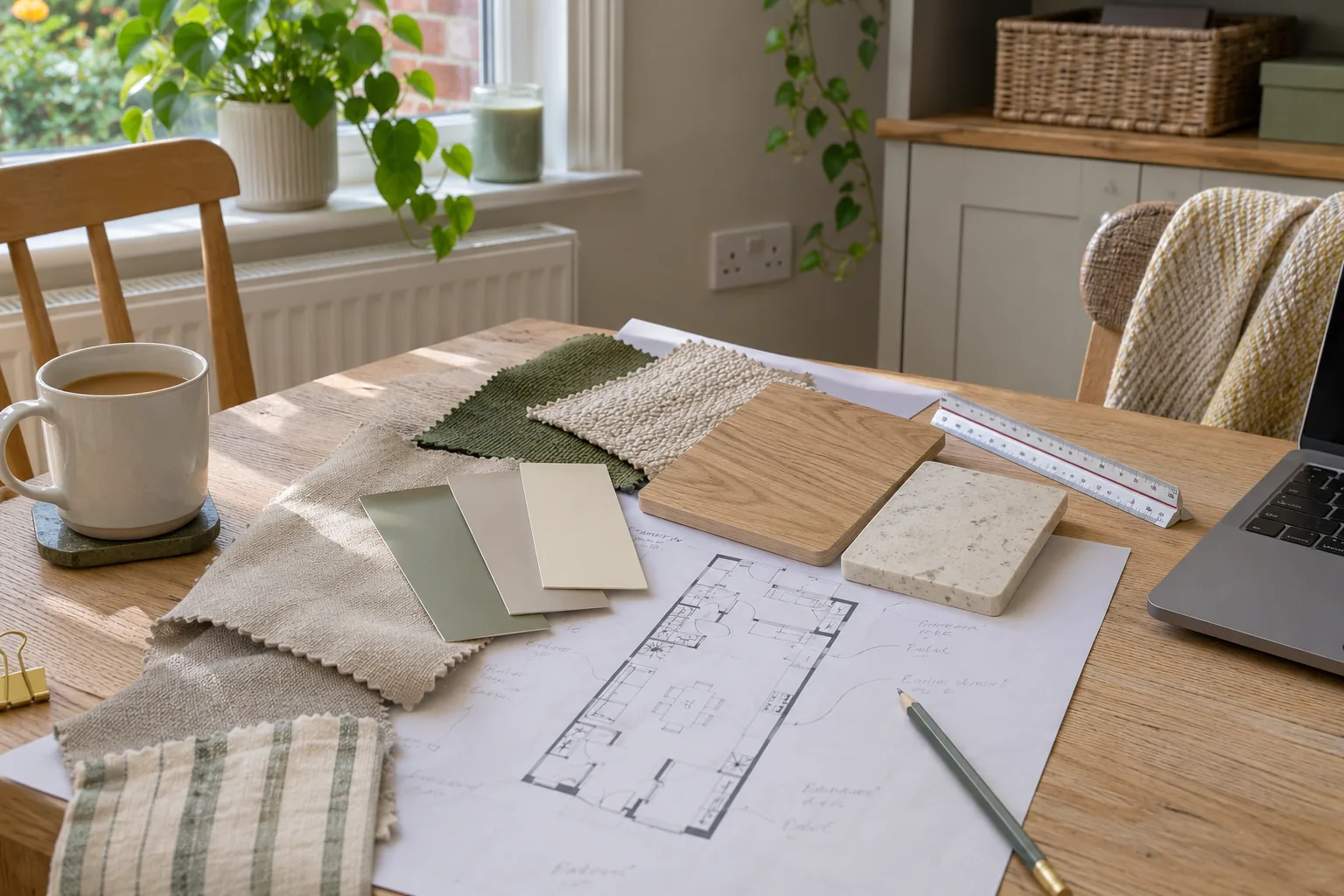
Character in an old house comes from depth and shadow: skirting, architrave, panelling, a cornice, a solid door with a proper handle. New-builds have flat walls and shallow mouldings. Add some back.
Panelling is, in our view, the most effective. It is an alteration, not a removable accessory: agree it with the landlord if you rent, and check the wall construction before choosing fixings, because adhesive can damage the finish and make removal harder. Simple panelling to dado height, about 900 to 1,000mm, in MDF or timber strips glued and pinned to the wall (run a cable detector over it first), then painted, gives a living room or bedroom a base and a line. Keep the panels plain and wide; very fussy mouldings look stuck on.
Door furniture is next. Most new-builds come with thin satin chrome lever handles. On an ordinary internal door, brass or bronze levers can be a modest improvement. Check which doors are fire doors first: in a flat, some internal doors may be fire-resisting too, and replacement hardware must suit the doorset; weight and colour are not the specification. Your front door, in a block of flats, will normally be a fire door. The Fire Safety (England) Regulations 2022, in force since 23 January 2023, require the responsible person in residential buildings over 11m tall to use best endeavours to check flat entrance fire doors at least once a year, and to check communal fire doors at least every three months. Do not change the handle, closer or hinges, cut it or swap it without checking with your managing agent or freeholder.
Lighting matters a great deal in a flat with 2.4m ceilings. Use wall lights or plug-in wall lights, table lamps and a floor lamp, all with warm 2700K bulbs, and leave the downlights off in the evening. A room lit at sitting height looks larger and older.
Joinery finishes the job. A window seat, alcove-style shelves either side of the television, or a deep shelf above a radiator all add the depth the walls lack.
Renters
Before anything, read your tenancy and ask your landlord in writing; some will agree to paint or shelves if you offer to return the walls to their original colour. If they will not:
- Hang curtains from a tension rod or ask permission for just the pole, which is easy to make good.
- Use lamps instead of changing light fittings.
- Stand pictures and small mirrors on a shelf or on top of low furniture.
- Cover a dull floor with a large rug.
- Choose storage you can install safely. If a bookcase needs wall anchoring, get permission and fit the restraint; if permission is refused, choose a lower unit whose instructions suit the space.
- Swap the cupboard knobs, keep the originals in a labelled bag and put them back when you leave.
Where to start
Start free: rearrange the furniture and clear the walking route. As rough studio guidance, under £250 might cover a lamp and some small storage; £250 to £1,000 allows longer curtains, a rug or a good second-hand piece. Price fitted storage separately, and secure any mirror as its maker directs. You will see the difference from the first evening.
Sources
- GOV.UK: Fire Safety (England) Regulations 2022, fact sheet overview
- GOV.UK: Fire Safety (England) Regulations 2022, fire door guidance
- IKEA UK: HOVET mirror, safety and installation notes
- IKEA UK: Secure it, anchoring furniture to the wall
- Farrow & Ball: Setting Plaster No. 231
- John Lewis: Little Greene Absolute Matt Emulsion, Slaked Lime (105), £60 for 2.5L (November 2026)
- Wickes: Dulux Matt Emulsion, Pebble Shore, £25 for 2.5L (November 2026)
- All Paint Colours: Lick Green 07